Plan Bengaluru wedding catering around three decisions: menu depth (a balanced veg spread runs ₹450–₹1,200 per plate; non-veg ₹650–₹1,600), realistic turnout (70–85% of invitees for receptions, more for lunch muhurthams), and the counting method in your contract. Always do a tasting, and put the final-count lock date in writing.
Nobody remembers the chair covers. Everybody remembers the food. Catering is simultaneously the biggest line in a Bengaluru wedding budget and the part most families negotiate blind — comparing per-plate rates without comparing what is on the plate. Here is how our kitchen builds wedding menus for everything from 150-guest engagements to 2,000-guest receptions.
Build the menu backwards from the moment of eating
A lunch muhurtham crowd eats a proper meal — traditional, generous, sit-down if possible. A reception crowd grazes — starters circulating, counters, a lighter main spread. Matching format to moment matters more than adding dishes:
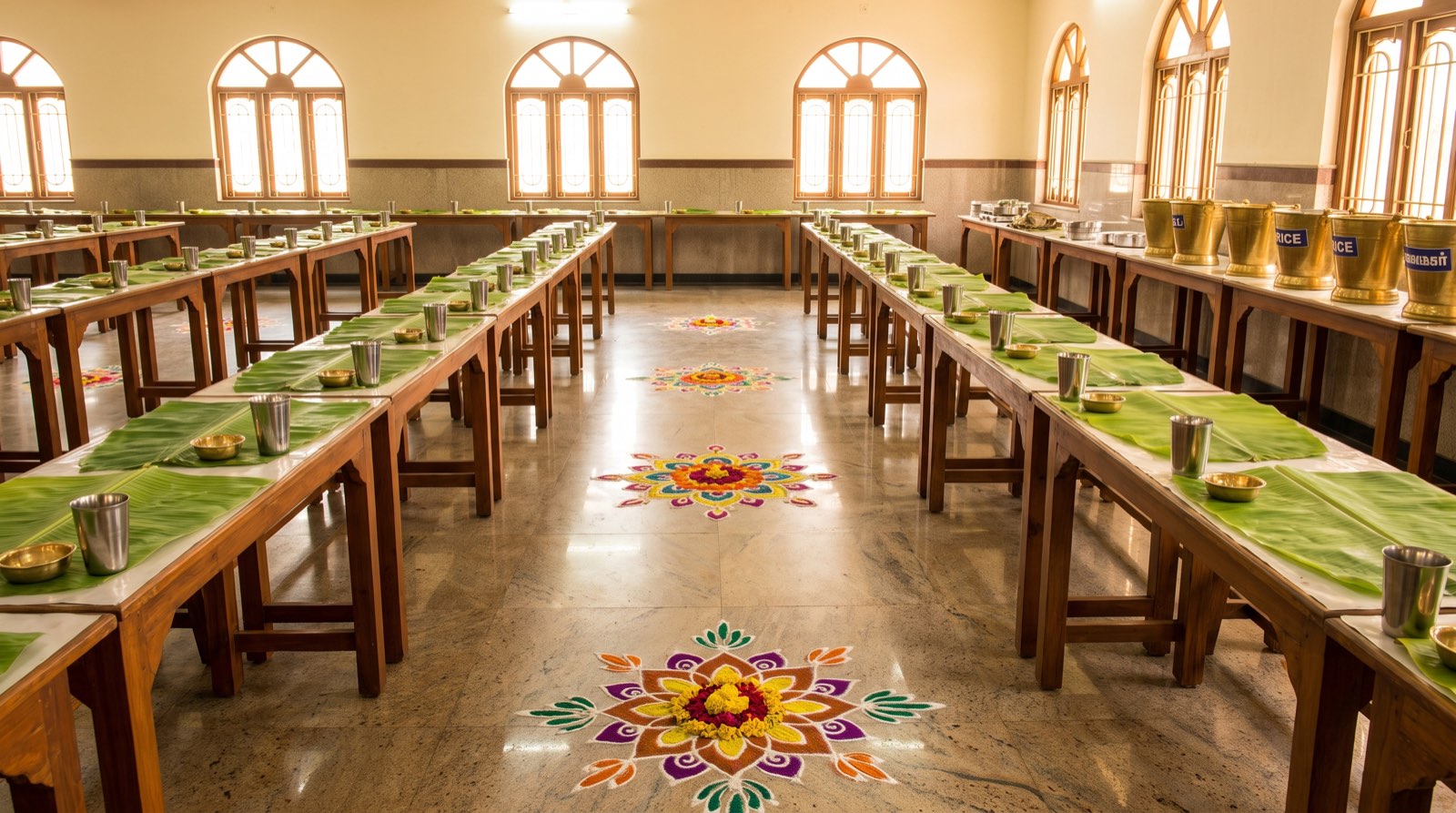
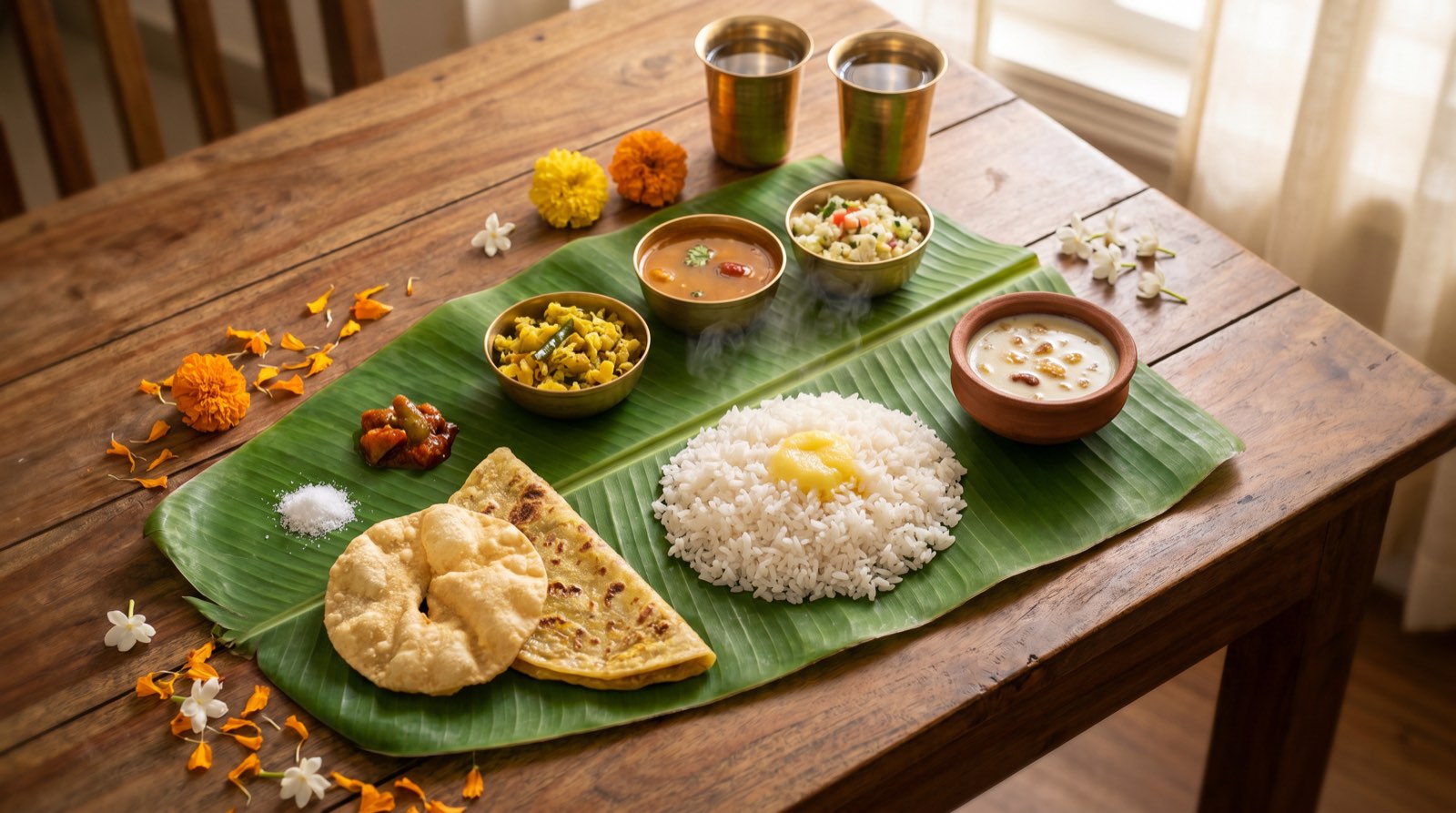
- Lunch muhurtham (traditional): full South Indian spread — kosambari, palya, sambar-rice sequence, two sweets, payasa. Banana-leaf service elevates it instantly.
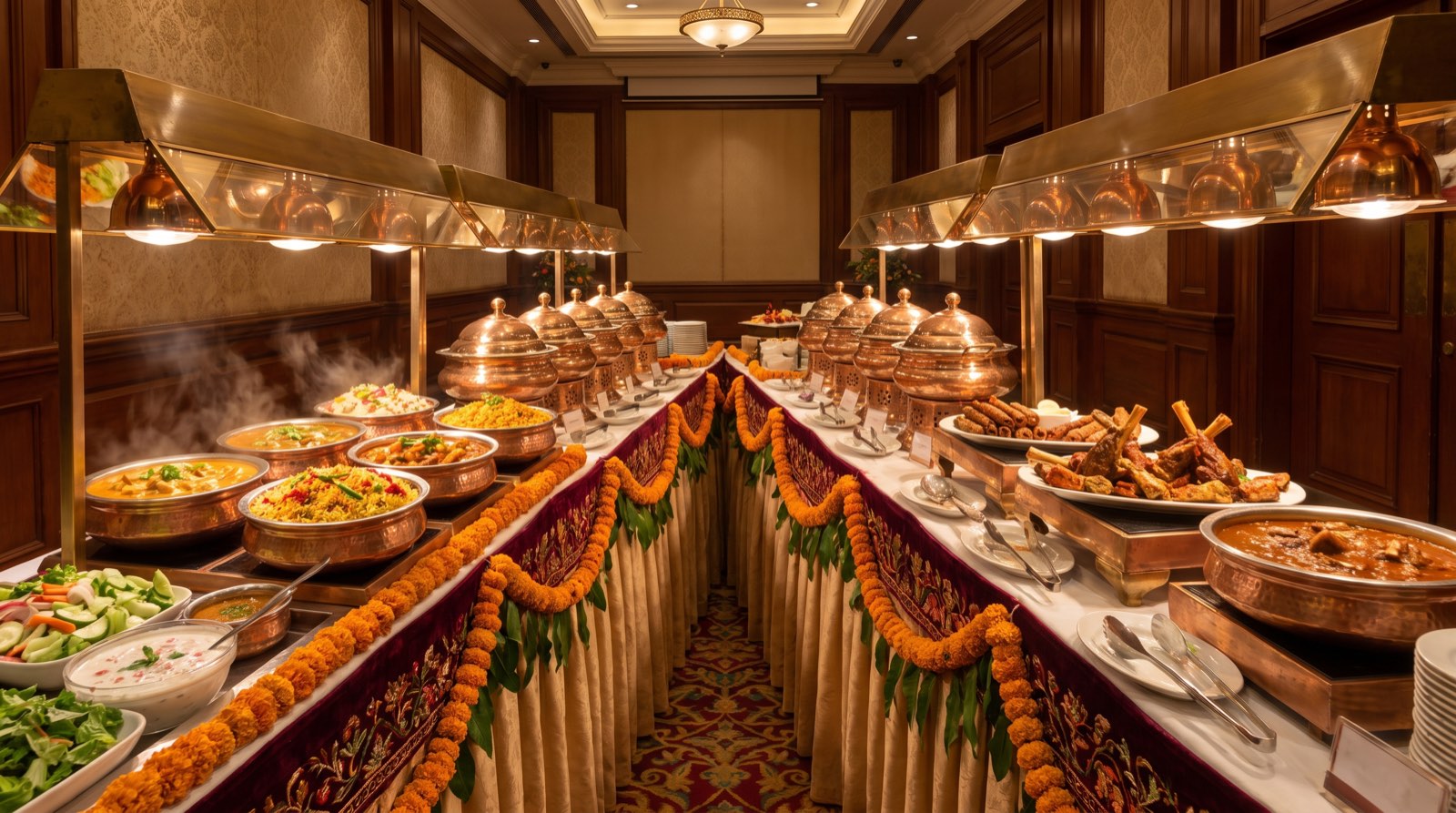
- Evening reception: 4–6 circulating starters, 2–3 live counters, a compact main buffet, dessert table with 3–4 choices.
- Mixed crowds: one clearly separated non-veg line with its own service team prevents 90% of food-related complaints.
- Always: a children’s corner (fries, pasta, ice cream) and a diabetic-friendly dessert option — the two most thanked-for details.
How much food per guest: the quantities venues actually use
| Item | Per-guest planning figure |
|---|---|
| Starters (reception) | 6–8 pieces across all varieties |
| Main course | 450–550g cooked food total |
| Rice/biryani | 150–200g per guest within the above |
| Sweets/desserts | 2 pieces + one scoop/serving |
| Welcome drinks | 1.5 servings per guest |
| Water | 1 litre per guest across the event |
Turnout maths: evening receptions typically see 70–85% of the invite list; lunch muhurthams with close family and community often exceed 90%. Guarantee slightly under your expectation and keep a 10% buffer clause — venues can nearly always scale up on the day, but you cannot un-cook food.
Live counters: the highest-ROI spend on your menu
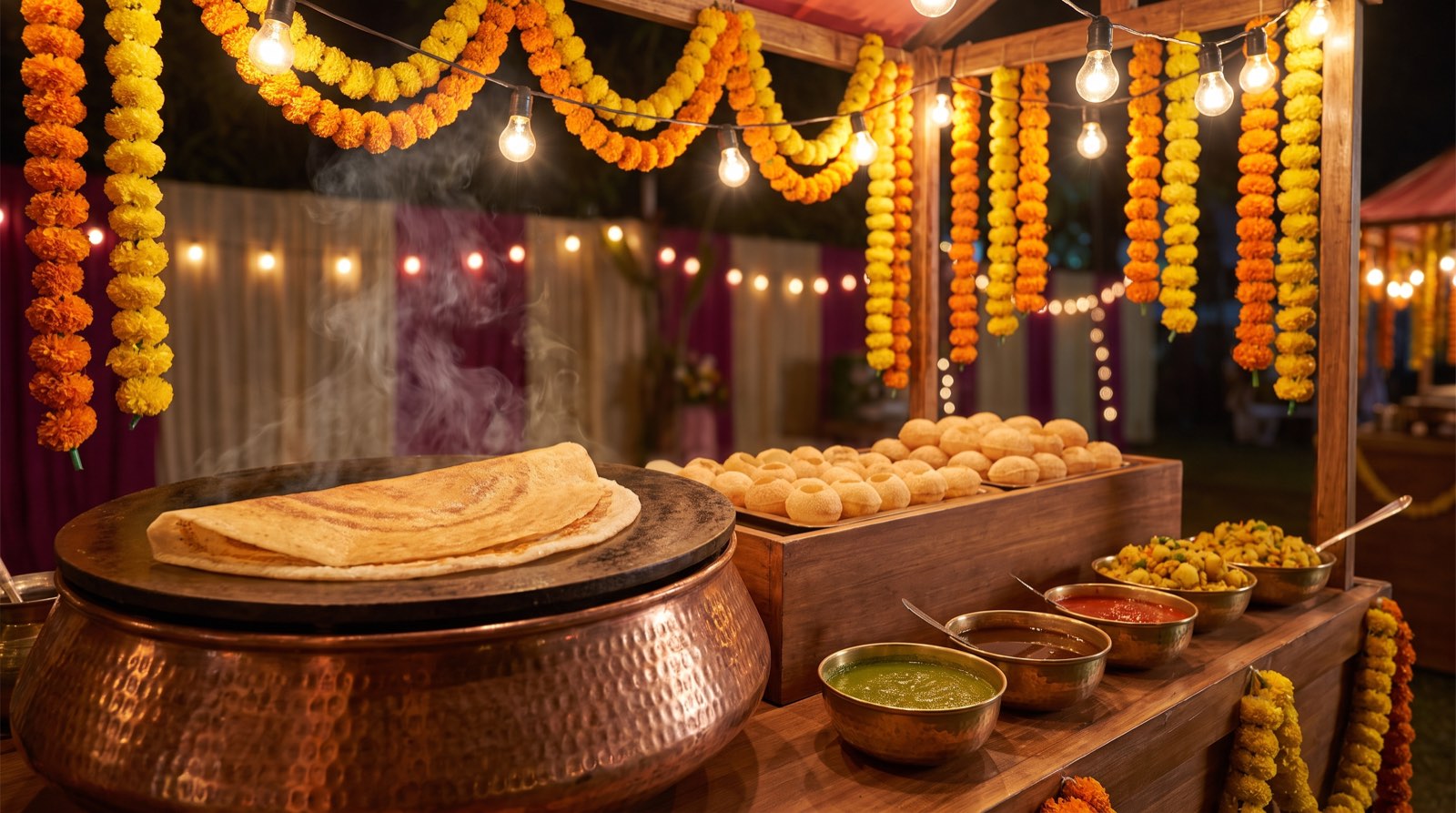
Live counters add ₹60–₹150 per plate and generate more guest delight per rupee than anything else at a wedding. The reliable hierarchy in Bengaluru: dosa/benne dose counters first, then chaat, then pasta or noodle bars for younger crowds, then dessert theatrics (jalebi-rabri, ice-cream tawa). Two well-run counters beat four crowded ones — each needs its own queue space and a dedicated cook, not a shared one.
The contract details that decide your final bill
- Counting method: per-plate-served (counted at the buffet), guaranteed-minimum-plus-actuals, or flat package. Get it named in the contract.
- Final count lock: usually 48–72 hours before the event. After lock you pay for the guarantee even if fewer arrive.
- Staff and vendor meals: agree the count and a simpler menu rate for photographers, décor and band teams.
- Leftover policy: reputable venues will pack excess for the family or arrange donation — ask.
- Tasting: insist on a scheduled tasting of your actual shortlisted menu before locking. Any professional kitchen welcomes it; ours schedules tastings with every Gold and Platinum booking.
Frequently asked questions
How is wedding catering counted and billed?
What percentage of invited guests actually attend an Indian wedding?
Are live counters worth the extra cost?
Can Vijaykiran Convention Centre serve non-vegetarian food?
Planning an event? Talk to the team that hosts 200+ a year.
Check your date, walk the halls and taste the menu — no obligation. We respond within one working day.