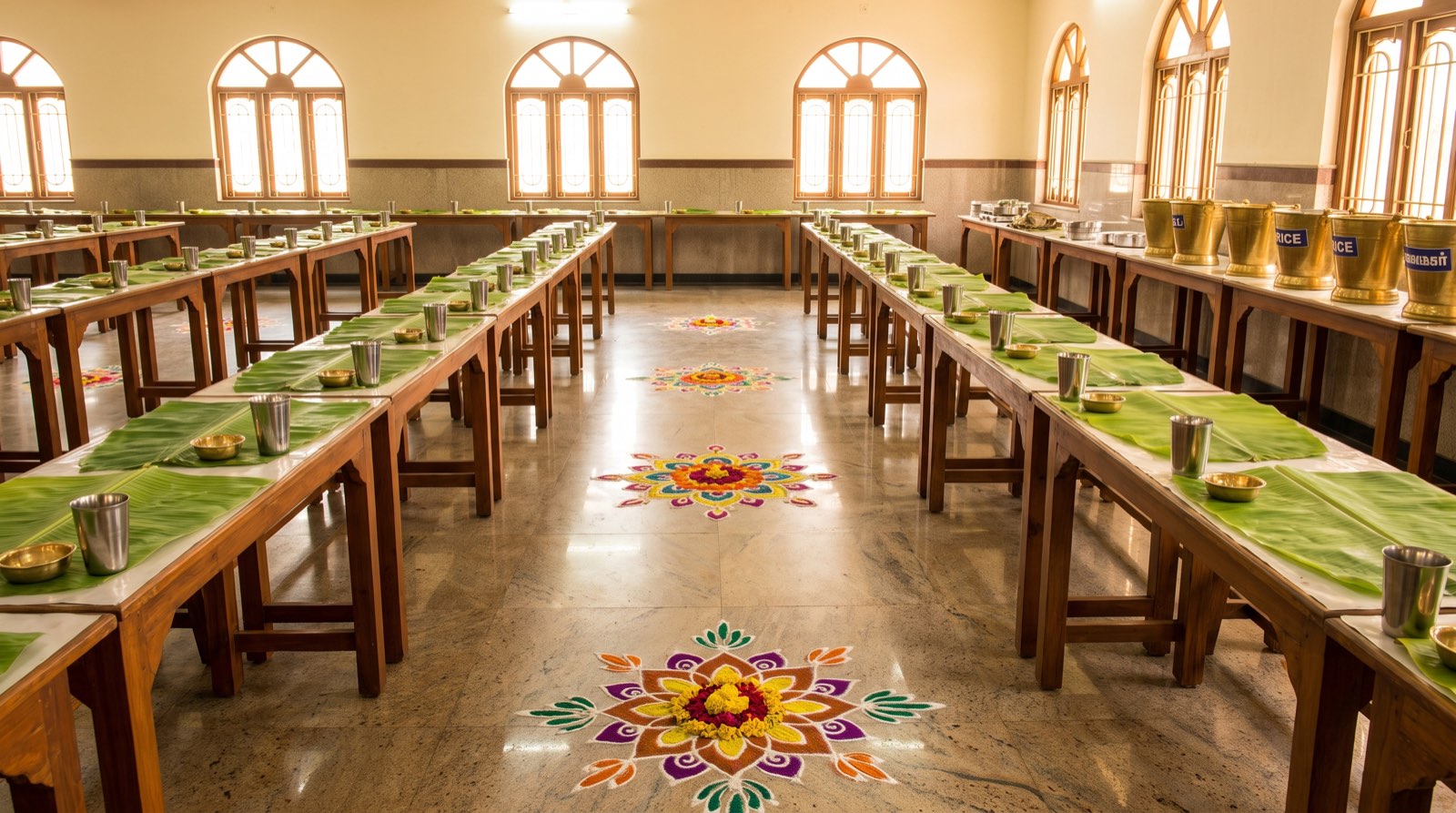
A banana-leaf feast (ele oota) seats guests in batches at long tables — plan 45 minutes per batch and a dining hall that seats 30–40% of your total guests at once. Staff one server per 25 guests per course. The leaf is laid tip-left, salt first, sweets top-right, rice centre-bottom. It costs similar to a buffet but delivers far more tradition per rupee.
For many South Indian families, the wedding meal is not a buffet question at all — it is ele oota, served hot onto a fresh banana leaf by moving lines of servers, eaten seated, in batches, the way it has been done for generations.
Running it for 800 guests is pure operations. Here is the maths and the choreography.
Batch maths decides everything
The dining hall’s seat count sets your rhythm: a 500-seat dining hall serving 1,000 guests runs two main batches plus a family batch, at roughly 45 minutes per batch including reset. Guests drift to dining over ~90 minutes, so a hall seating 30–40% of the total invitation handles the flow without queues backing into the wedding hall. Under-sized dining halls, not slow cooks, are why some weddings feed people until 4pm.
- One server per 25 guests per serving pass keeps courses moving — a 500-seat batch wants a 20-server brigade minimum
- Batch one belongs to elders and out-of-town guests; announce batches from the stage to prevent the polite hover
- Leaf-laying and water service start ten minutes before the batch sits — the batch clock starts at first serving, not first seating
The leaf has a grammar
- Leaf placed tip pointing left, shiny side up; salt goes on first, bottom-left — service begins with it
- Top row, right to left: payasa and sweets, then kosambari, palya, gojju, pickle at the far left
- Bottom centre: rice with ghee, then the ladle courses in order — tovve, huli/sambar, rasam, and majjige (buttermilk) to close
- Sweets are served first in Karnataka tradition — obbattu or holige before the rice courses, not after
- Courses are offered twice; the polite “swalpa” refill culture is the point of the format
Cost vs buffet — the honest comparison
Per plate, ele oota and a mid-range buffet cost surprisingly similar in Bengaluru — ₹350–₹600 vegetarian — because what the leaf saves in crockery and chafing-dish rental it spends on serving staff. What tips families toward the leaf is everything money doesn’t measure: elders eating a proper seated meal, food served hot at the moment of eating, zero plate-juggling for grandparents, and a dining hall that sounds like a wedding rather than a food court. A venue with a purpose-built 500-seat dining hall makes the choice easy.
Frequently asked questions
How is food arranged on a banana leaf at weddings?
How long does a banana-leaf batch take?
Is a banana-leaf meal cheaper than a buffet?
Planning an event? Talk to the team that hosts 200+ a year.
Check your date, walk the halls and taste the menu — no obligation. We respond within one working day.