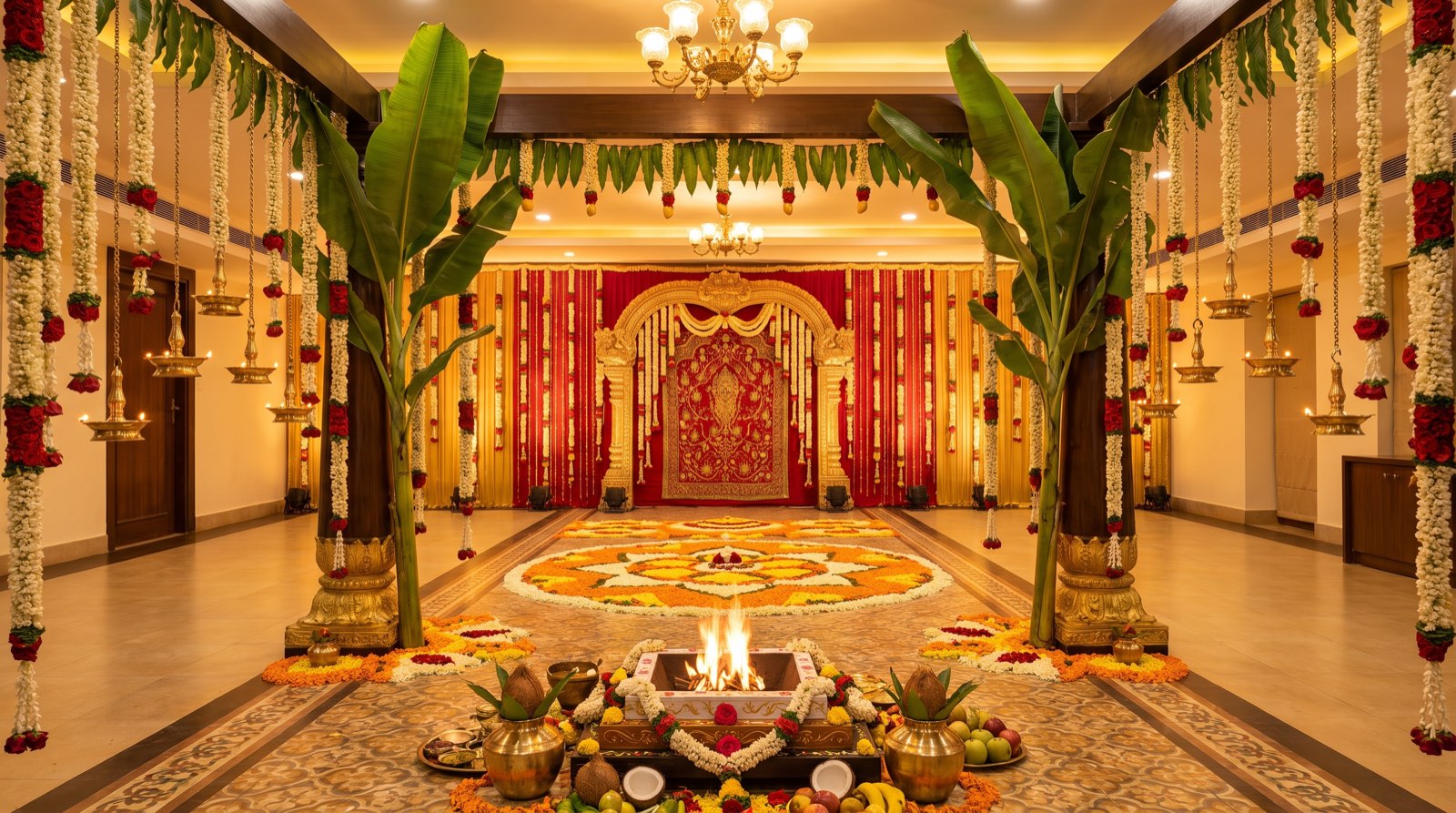
A half-saree or dhoti function for 100–400 guests needs a banquet hall with a traditional stage, a green room for the multiple outfit changes at the heart of the ritual, silk-and-jasmine décor in rich South Indian colours, a strong photography plan, and a festive meal. Bengaluru budgets run ₹1.5–₹5 lakh all-in.
The half-saree function — langa voni in Telugu families, langa davani in Kannada — and its dhoti counterpart for boys mark a child stepping formally into tradition. It is equal parts ritual, fashion show and family reunion, usually the biggest event a family hosts between naming ceremony and wedding.
Here is how to plan one that honours the tradition and survives the outfit changes.
The ritual is a costume drama — plan for it
- The ceremony’s centrepiece is transformation: the girl enters in a childhood langa, receives and returns in her first half-saree (or the boy his first dhoti) — often with two or three outfit changes across the event
- A proper green room beside the stage is therefore not a luxury but the main logistical requirement — mirror, AC, an aunt with safety pins, and five minutes of calm per change
- Maternal uncles and grandparents have defined ritual roles — brief them on timing so the stage never waits
- Time the first-half-saree moment for when photography light and guest attendance both peak — typically an hour after the stated start
Décor and photography that suit the occasion
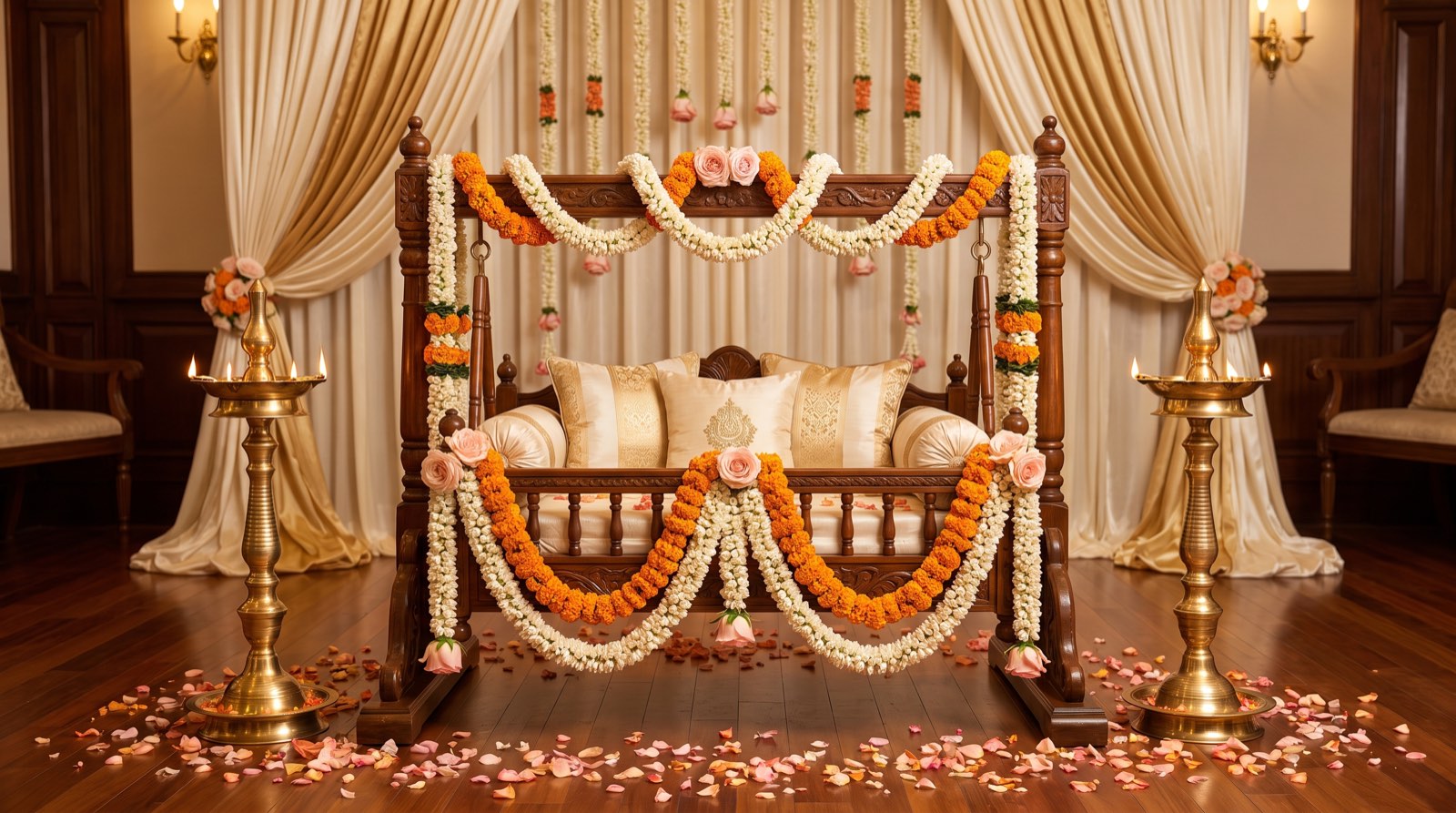
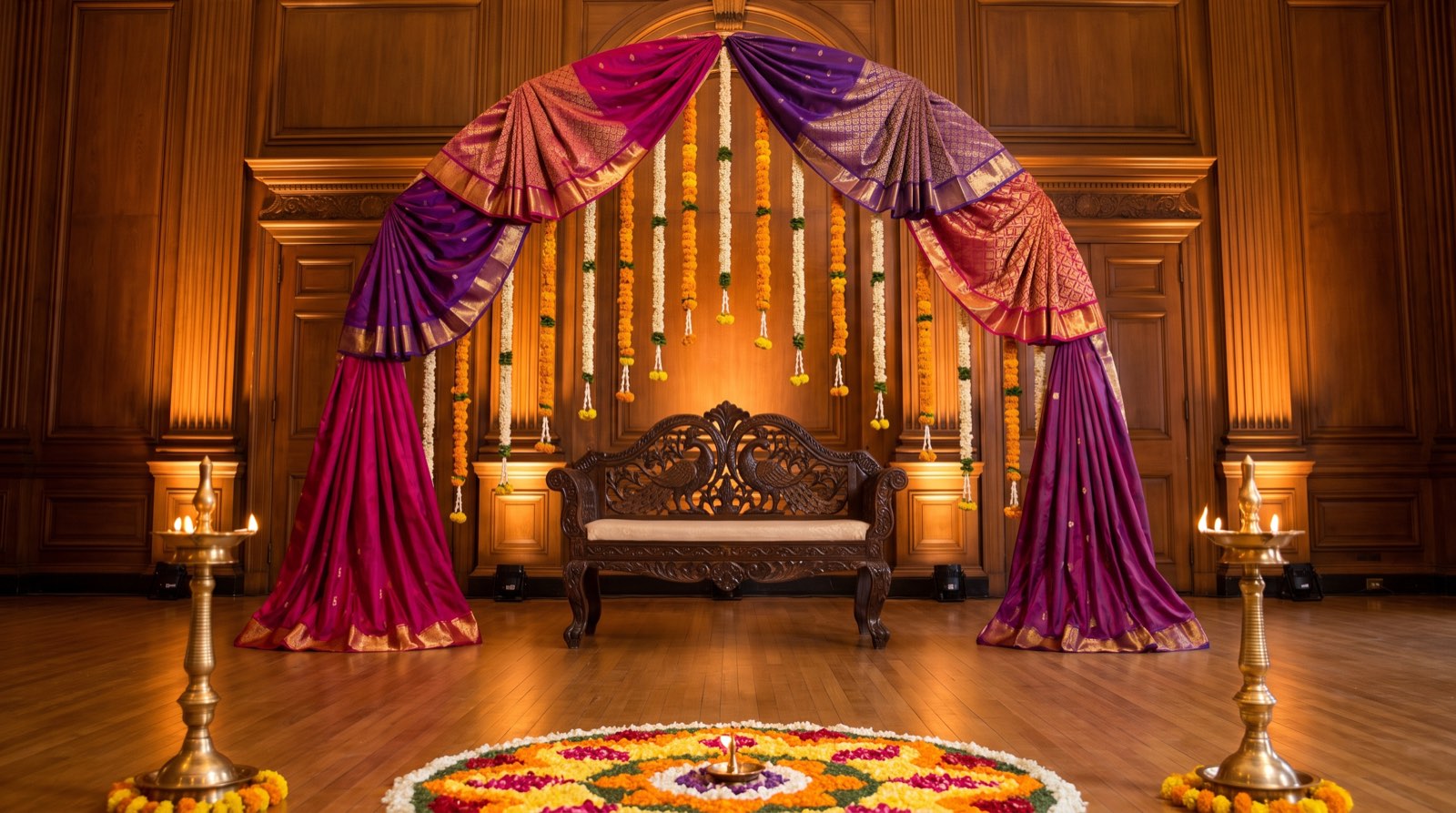
- Colour language: rich silks — magenta, emerald, gold — with jasmine strings and temple-style motifs photograph as festive and traditional; pastel wedding palettes read wrong for this event
- An oonjal (decorated swing) or peacock-motif seat makes the signature stage element and the family-photo anchor
- Brief the photographer on the ritual sequence — the aarti, the presentation of the saree, the uncle’s role — so the once-only moments are covered from the right side
- A small photo corner with a silk backdrop keeps guest photography off the stage between rituals
Scale and budget
These functions have grown — 100 guests was typical a generation ago; 250–400 is common in Bengaluru now, which moves the event from home to hall. Budget bands: banquet hall ₹30,000–₹80,000, traditional décor with oonjal ₹25,000–₹75,000, silk outfits and jewellery per family taste, catering at ₹350–₹600 per plate for a festive vegetarian spread, photography ₹20,000–₹50,000. Most families land between ₹1.5 and ₹5 lakh — and a venue that has hosted the ritual before will quietly steer the day’s timing better than any planner.
Frequently asked questions
What is a half-saree function?
How much does a half-saree function cost in Bengaluru?
What venue features matter most for a half-saree function?
Planning an event? Talk to the team that hosts 200+ a year.
Check your date, walk the halls and taste the menu — no obligation. We respond within one working day.