Booking a hall for a pooja needs four confirmations: the venue permits homa/agni rituals with ventilation, floor seating for the ritual zone plus chairs for elders, a kitchen or prasadam-handling area with pure-veg protocol, and morning-slot timing aligned with the priest’s muhurta. A 100–300 guest satyanarayana pooja with prasadam meal runs ₹60,000–₹2 lakh in Bengaluru.
Some poojas outgrow the living room — a satyanarayana katha for the whole extended family, a community Ganesha utsava, a gruhapravesha-scale blessing where the guest list crossed a hundred at the second phone call.
Hosting a ritual at a hall keeps the sanctity while adding space, parking and a kitchen. Here is what to confirm.
The four venue confirmations
- Agni policy — homa fires need explicit permission, ventilation or extraction above the kunda, and a floor-protection plan; never assume, always ask
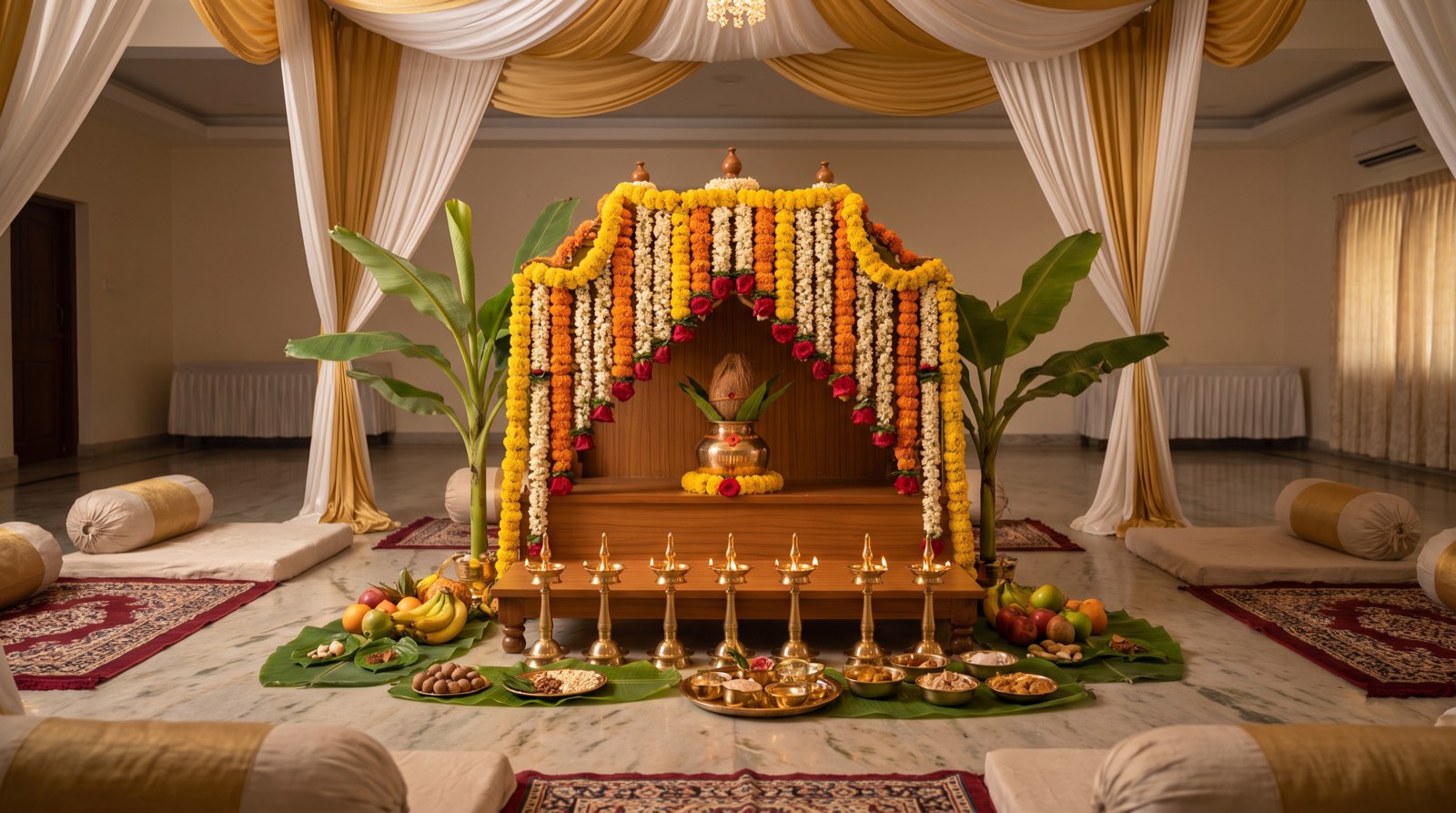
- Seating hybrid — a carpeted floor-seating zone around the ritual for participants, with rows of chairs behind for elders and knees that have opinions
- Prasadam protocol — a pure-veg kitchen or clean handling area; for satyanarayana pooja, where eating prasadam is part of the vrata, service logistics matter as much as cooking
- Timing — most poojas anchor to a morning muhurta; confirm the hall’s earliest access for the priest’s setup (usually 60–90 minutes before) and decoration the previous evening if possible
Coordinating priest, ritual and hall
- Share the venue’s address, floor plan and power points with your purohit in advance — mic for the katha, samagri table placement and kalash positions all settle in one call
- Samagri shopping: your priest’s list plus the venue’s additions (floor covering, brass lamp stands, banana stalks) — many Bengaluru halls arrange the décor items in-house
- Sound: a lapel mic on the priest transforms the experience for 200 attendees; katha without amplification reaches the first three rows only
- Aarti crowd-flow: plan the line past the altar and the teertha-prasadam handover point so 300 people move through in twenty minutes, not ninety
Costs and the community variant
A family satyanarayana pooja for 100–300 guests: hall ₹20,000–₹60,000 for the half-day, priest and samagri ₹5,000–₹15,000, décor ₹10,000–₹40,000, prasadam meal at ₹250–₹450 per plate — ₹60,000 to ₹2 lakh all-in. Community events — apartment Ganesha utsavas, temple anniversary celebrations, mass thread ceremonies — scale the same template up and benefit most from venue parking, generator backup and a dining hall that serves everyone in batches. The ritual stays exactly as tradition demands; only the logistics get an upgrade.
Frequently asked questions
Can a homa or havan be performed in a function hall?
How much does hosting a satyanarayana pooja at a hall cost?
What seating works best for a pooja at a hall?
Planning an event? Talk to the team that hosts 200+ a year.
Check your date, walk the halls and taste the menu — no obligation. We respond within one working day.